
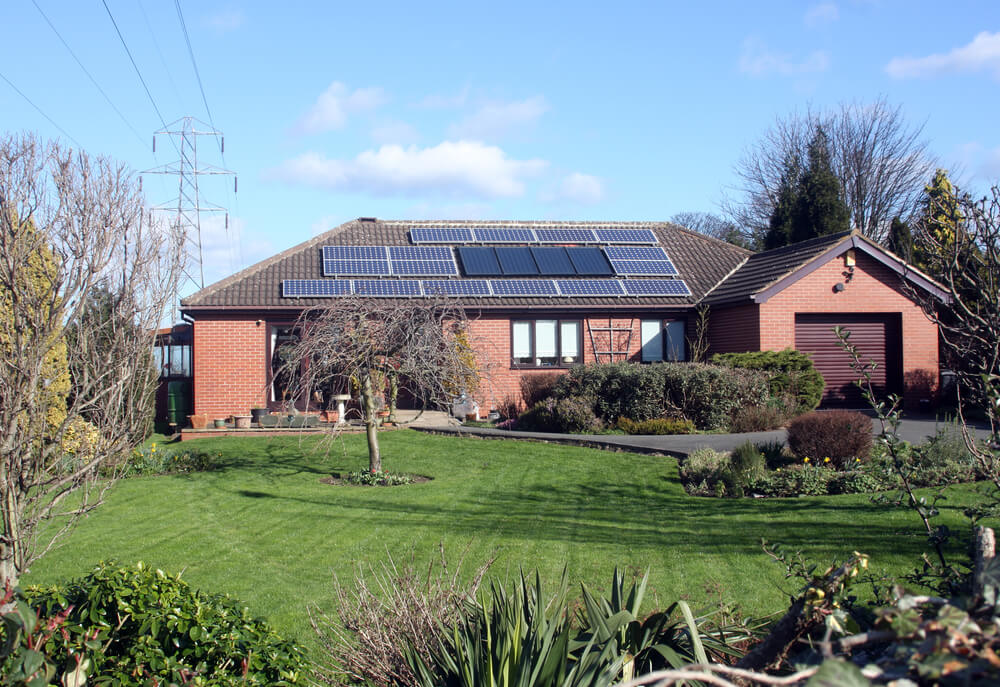
‘If you have solar panels, then this is definitely something to consider when you come to sell,’ says Faye Green, Partner and Head of the residential property team with QualitySolicitors Parkinson Wright. ‘For some, solar panels will be a positive. For others, their presence may prove more challenging. It all depends on the facts and the terms of any agreement covering them. Selling a home with solar panels can sometimes be tricky, but a good conveyancer can guide you through any issues.’
Faye explains some of those issues and offers some advice.
First, establish who owns the solar panels
A lot of issues sellers experience arise because they do not own the solar panels. Instead, a third party (usually a solar power company) owns them. The homeowner grants the company a lease of their roof space onto which the company can install and maintain their panels, sometimes on the promise of free or cheaper electricity. If this is your situation, there should be a lease agreement. That agreement will typically restrict what you can and cannot do with your property as well as what happens to the electricity generated. When your home changes hands, your buyer will be bound by its terms. So, they will need to be satisfied with the arrangement. And if those terms are unusual or onerous, this can cause problems.
If you own the panels yourself then things are usually more straightforward, although there will still be additional factors to consider.
It is important therefore to establish ownership early on and the terms of any agreement. You should have a copy of any lease agreement. If you do not, your solicitor should be able to obtain one from the Land Registry or through third party enquiries.
Problems that may arise with solar panel leases
If your solar panels are leased, the lease agreement will also need to be transferred when you sell. Effectively, your buyer will be stepping into your shoes and will be bound by the terms you, or your predecessor, agreed with the solar panel company. This could include a requirement for that company’s consent to the transfer, or even for you to pay an exit fee. If so, you should factor in additional time or costs for this.
Even if there is no issue with the actual transfer, other terms may be unacceptable to your buyer. For example, the lease may prevent you repairing the roof without the company’s agreement, or may contain an option for the company to renew beyond the original term. This can cause problems with mortgage lenders too, some of whom will not lend where there is a solar panel lease. Most will lend but have stipulations about what they will and will not accept. For example, a lender may require the ability to end the lease if they repossess the property. In a worst-case scenario, a solar panel lease can make a property unmortgageable which will limit its appeal to cash buyers.
Occasionally, you may find the original solar power company no longer exists, for example because it has become insolvent. It may then be unclear who can give any necessary consents under the lease or who is responsible for the panels’ maintenance and repair. The buyer will want this resolved before proceeding. While there will usually be a successor company, tracing them can be tricky. This will also take time which can stretch the patience of buyers, sometimes to breaking point. So, it is important to think ahead.
Information needed if you own the solar panels
As with any major addition to your property, the buyer will need to know any necessary consents are in place. While planning permission is not usually required, you may need consent if your property is listed or in a conservation area. Your conveyancer will also need to check whether consent is required under the terms of any lease or your title deeds.
Panels can put a strain on roof timbers, and your buyer may have concerns about the structural integrity of the building. They may also want reassurance on the quality of the installation. So, you should also provide details of any survey, reports, or warranties you have. Unlike gas installations, there is no legal requirement for solar panels or their installers to be certified. However, showing your panels are covered by the Microgeneration Certificate Scheme can give reassurance that they are fit for purpose. Certification is also a requirement for certain incentive schemes such as the Smart Export Guarantee.
Confirm the arrangements for any tariffs
Whether you own the panels or not, your buyer will want to know what happens to the electricity generated. After all, for many the main attraction of solar panels is their potential to save energy costs.
If you do not own the solar panels, the lease agreement is likely to determine entitlement to these benefits. You, or your conveyancer, should check the provisions early on so everyone is clear on this. If you own the panels, then you may well have the benefit of any payments or free electricity, for example, under the Feed-in or Export Tariff Schemes or the Smart Export Guarantee Scheme, and you should provide details of these and copies of your energy bills.
Access to these schemes can be a positive when it comes to selling. However, you, or your conveyancer, will also need to ensure the benefit passes to your buyer. You will need to factor this process and the additional time involved into your plans.
A final word, and how we can help
Even if you own the solar panels, their presence is likely to make selling your home a little more complicated. Gathering the relevant information and discussing matters with your conveyancer early on will help ensure your transaction runs smoothly.
If you do not own the panels, then the issues may be more complicated. This makes it even more important to discuss your plans with your professional advisors in advance, ideally even before marketing your home. This will allow them to identify any issues and explore potential solutions, such as negotiating the variation of a lease term or finding a successor company where the original energy company no longer exists, as well as to manage your buyer’s expectations.
Our conveyancers at QualitySolicitors Parkinson Wright are experienced in conveyancing all types of properties, including those with solar panels, and would welcome the opportunity to help you make your next house move.
For further information, please contact Faye Green or a member of the residential property team on 01905 721600 or email worcester@parkinsonwright.co.uk
This article is for general information only and does not constitute legal or professional advice. Please note that the law may have changed since this article was published