
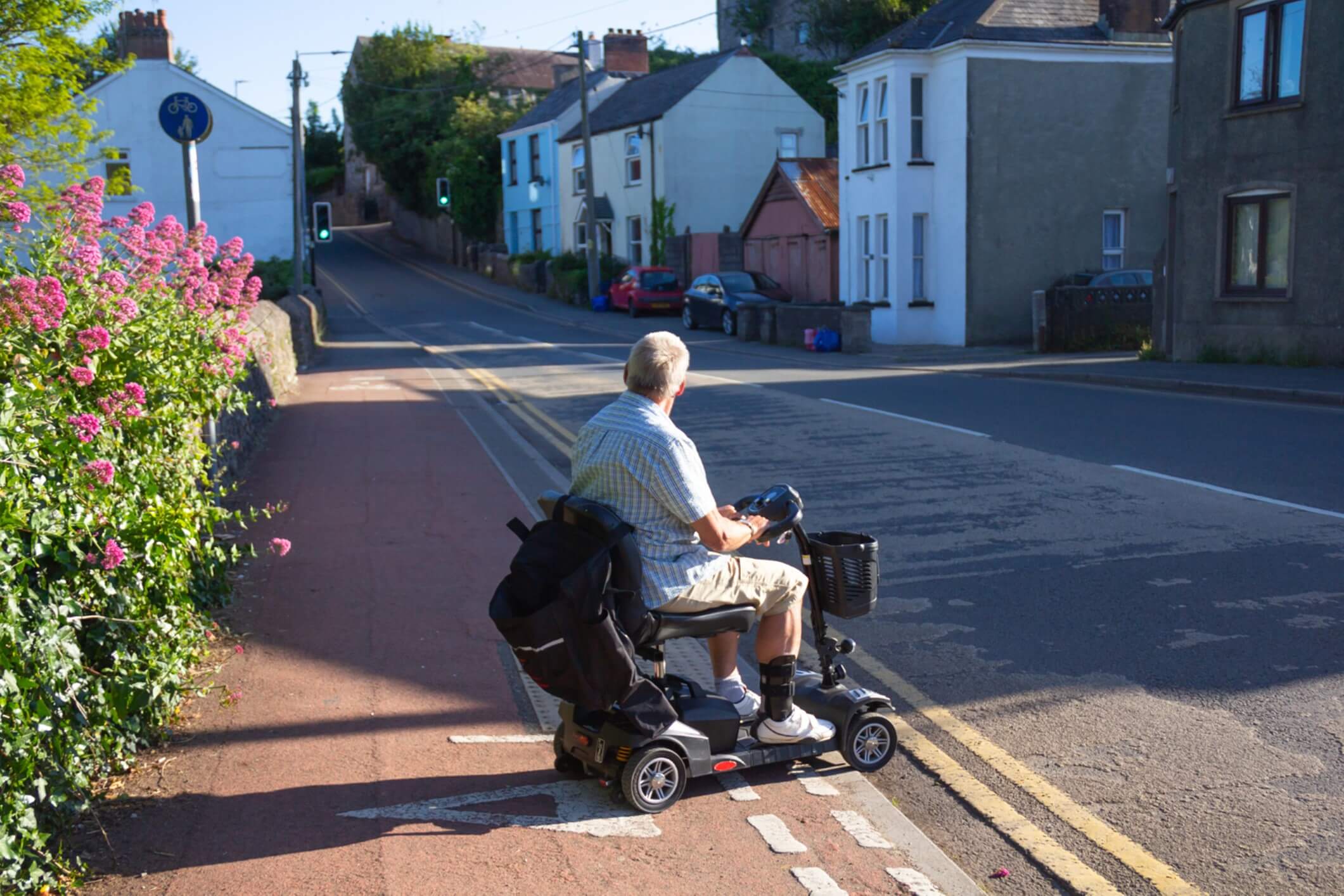
More than one million people with mobility issues use powered wheelchairs or scooters in the UK, suggests research by the Motability and the Wheelchair Alliance. Mobility scooter riders are more than two and a half times more likely to be killed in a crash compared to other road users, according to data from the Department for Transport. Although research by insurers shows that in 79% of injury collisions, the mobility scooter user themselves was the victim, others are also suffering harm at the hands of users who may be unskilled, untrained or uninsured.
‘These battery-operated vehicles are heavy and can reach speeds of 8 mph (wheelchairs) and 25 mph (scooters), and yet users are not usually obliged to take a test or even have any training before they go out on the roads and pavements. Only a proportion of vehicles are required to have insurance,’ says Jonathan Lewis, a solicitor in the personal injury team with QualitySolicitors Parkinson Wright. ‘It is therefore unsurprising that casualties involving mobility scooters have increased by an average of 20% annually over the past decade, according to government figures from the Department for Transport.’
Who can drive a mobility vehicle?
Someone can only drive a mobility scooter or powered wheelchair if they:
- have problems walking because of an injury, physical disability or medical condition;
- are taking the vehicle to or from maintenance or repair;
- are the manufacturer testing the vehicle;
- are demonstrating the vehicle before it is sold; or
- are training a disabled user.
If a user does not satisfy one of the above conditions and they have an accident, they may be given the same penalty as if they were driving a car. Driving a mobility scooter when not eligible can lead to fines, points on the driver’s licence, and even a driving ban.
What are the different classes of mobility vehicles?
A mobility scooter or powered wheelchair is usually in class 2 if it has a maximum speed of 4 mph or less, or class 3 if it has a maximum speed of 8 mph. Class 2 vehicles can only be driven on pavements or cycle tracks, while class 3 vehicles can also be used on the road.
A vehicle is not in a class if it can go more than 8 mph, is wider than 0.85 metres or it weighs more than 150kg. Such vehicles can only be driven on the road and users must get a valid driving licence to drive one.
Mobility scooters and powered wheelchairs in class 3 or not in a class must be registered with the DVLA. Crucially, they only need to be insured if they are not in a class and weigh more than 254kg.
Why are mobility vehicle accidents happening?
Mobility vehicle accidents can occur due to a combination of factors, including user error, environmental hazards, and vehicle design flaws. Accidents commonly happen because of:
- incorrect throttle use – sudden acceleration or deceleration can lead to crashes;
- abrupt swerving – fast manoeuvres to dodge obstacles can cause the vehicle to tip or go out of control;
- lack of awareness – distracted or inattentive users may not notice obstacles or changes in terrain, leading to accidents;
- speeding – operating a mobility scooter at excessive speed, especially on an uneven surface or around a corner, can increase the risk of losing control;
- inadequate training – not being properly trained to use the vehicle and navigate different environments can contribute to accidents;
- uneven surfaces – potholes, cracked pavements, and other uneven surfaces can cause the vehicle to topple;
- kerbs – bumping into or attempting to mount kerbs can lead to falls or rollovers;
- slopes and ramps – steep slopes or ramps can be hard to navigate and may cause the vehicle to tip or roll;
- obstacles – parked cars, street furniture, or overhanging trees can obstruct the path and cause collisions;
- poor lighting and visibility – inadequate lighting or visibility can make it difficult to identify hazards, increasing the risk of accidents;
- busy environments – crowded pavements or roads can increase the risk of collisions with other people, vehicles or objects;
- tipping – three-wheel mobility scooters are more prone to tipping than four-wheel models, especially at higher speeds or on uneven surfaces; and
- vehicle malfunction – brake failures, steering problems, or other mechanical issues can contribute to an accident.
What should you do if you are injured by a mobility vehicle?
If you are hit by a mobility vehicle and feel you may be entitled to compensation, you should get the name and contact details of the driver and any potential witnesses. Note the make, model, and registration number of the mobility vehicle, take photos of the scene, the vehicles involved, any visible damage and any injuries you have suffered.
Get the driver’s insurance details if they have any and, if you have your own insurance, you should also notify your insurer of the incident. If the mobility vehicle is leased through the Motability Scheme, the driver will usually have insurance and you should report the accident to its insurers – DLM (Direct Line Motability). They will want details about the incident, including the date, time, location, and any relevant information about the vehicle and those involved.
Keep a record of all communication, medical reports, and expenses related to the accident and write an account of how your injuries have affected your life.
What happens if the mobility vehicle driver has no insurance?
If you are hurt by an uninsured mobility vehicle in the UK, you can still claim compensation through the Motor Insurers' Bureau (MIB) – even though mobility scooters are not considered motor vehicles under UK law.
You will need to show that the mobility vehicle driver was to blame for the accident and that their negligence caused your injuries. This may involve proving they breached a duty of care, such as not following traffic rules or being negligent in their operation of the mobility vehicle. MIB claims must be made within three years of the accident.
How a solicitor can help
If you have been injured, you should seek legal advice from a solicitor who can help you claim compensation for any losses you have suffered as a result of the accident.
We will help you gather the evidence you need to bring your case – such as medical records and witness statements – and refer you to a medical expert who will assess the effect the accident has had on your life.
We will fight to negotiate a fair out-of-court settlement for you, and guide you through the process if your case has to go to court.
The compensation you receive for a mobility vehicle accident claim will vary depending on the severity of your injuries and the effect they have had on your life, but could include damages for:
- pain and suffering;
- loss of earnings;
- additional medical treatment or rehabilitation;
- out-of-pocket expenses; and
- adaptations required to your home.
For further information, please contact Jonathan Lewis or a member of the personal injury team on 01905 721600 or via email worcester@parkinsonwright.co.uk
This article is for general information only and does not constitute legal or professional advice. Please note that the law may have changed since this article was published.