

Understanding Your New Tenant Rights in England – Renters’ Rights Act 2025 & Awaab’s Law
England’s 11 million private renters will now receive greater security, rights and protections following the most significant upheaval of the rental market in almost 40 years. The government’s commitment to end homelessness and provide renters with a safer future has given rise to both the Renters’ Rights Act 2025, a bill dedicated to allowing renters to challenge poor living conditions and unreasonable rent increases without fear of immediate eviction, and the newly implemented Awaab’s Law, ensuring social (and, in the future, private) landlords understand and fulfil their responsibilities for tenant safety.
Read on to discover when the bills come into force, what they mean for renters and landlords, and how they’ll affect the future of the social and private rental markets
What is the Renters’ Rights Act 2025?
The Renters’ Rights Act will attempt to redress the relationship imbalance between the nation’s private renters and landlords, affording renters greater protection and a fairer and more predictable tenancy, as part of the government’s Plan for Change. The bill will be rolled out in stages, with notable changes coming into force as of May next year.
The legislation comprises numerous sections, covering four notable areas:
No More No-Fault Evictions
As of 1st May 2026, no-fault evictions will be abolished. Currently, landlords can evict tenants arbitrarily by giving appropriate notice, but tenant rights in England are set to be strengthened with the end of Section 21 notices (eviction without reason), providing renters with more predictability and peace of mind.
Periodic Tenancies
Tenancies will end when a tenant gives notice or when a landlord issues a valid Section 8 notice of seeking possession, such as when they are owed rent or are selling the property. With the majority of private sector rentals becoming assured periodic tenancies, tenants will often be able to stay in their properties for as long as they want. If they wish to end their tenancy, they can do so by giving two months’ notice.
Rent Increase Protections
Currently, landlords can increase rent up to the market value of their property, but this is set to change. Under the new Section 13 procedure, rent can only be increased once per year, and tenants must be given two months’ notice of the change. If a tenant feels the increase is too much, they can take a rent increase dispute case to a tribunal, and most importantly, they can’t be evicted for challenging the increase.
Tenant Requests
The new bill means that tenants have a legal right to request permission for a pet at the property, and this must either be accepted, or declined for a valid reason, such as allergy issues or property suitability. Landlords will have 28 days to consider the written request and to then respond.
Other key rights and protections under the Renters’ Rights Act 2025 include protection from discrimination for those on benefits or with children, the upfront rent deposit being limited to one month’s rent, and the introduction of the Private Rented Sector Landlord Ombudsman, who will consider tenants’ complaints quickly, fairly and impartially.
What is Awaab’s Law?
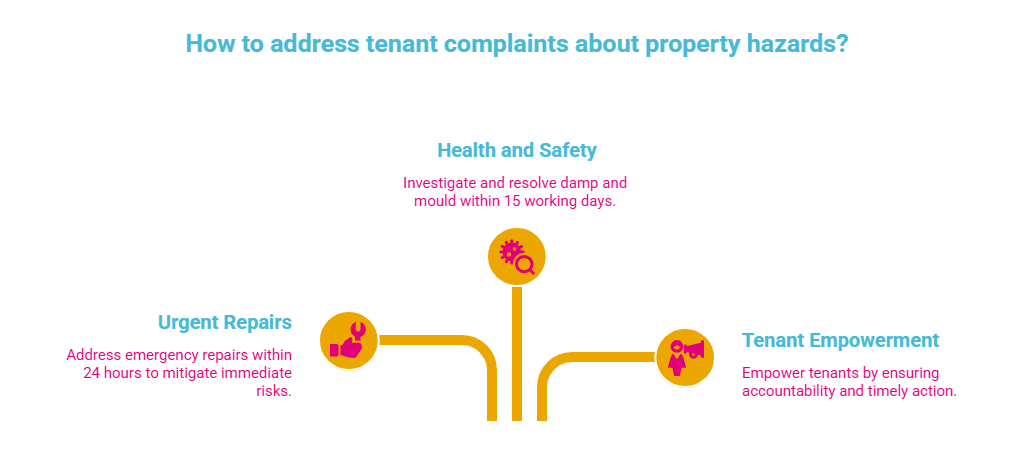
Awaab’s Law first came into force in October 2025 and highlights the government’s commitment to tenant safety by holding social landlords accountable for maintaining safe properties. It was introduced following the death of two-year-old Awaab Ishak due to prolonged exposure to mould in a social housing property.
To reduce the large number of tenant complaints about hazardous conditions, the legislation compels landlords to fix reported damp and mould and make emergency repairs within strict timeframes. Awaab’s Law will also be implemented in the private rental sector to improve tenant living conditions, and will expand to include other hazards, such as excessive cold or heat, in 2026.
Urgent Repairs
Following the legislation, emergency repairs (of any kind, including electrical faults, major leaks and damaged external windows or doors for example) should be addressed by landlords as soon as possible and within no longer than 24 hours, mitigating any further risk to all tenants.
Health and Safety
Dangerous levels of damp and mould, which pose a significant risk to tenants’ health and safety, should be investigated within 10 working days of the landlord being made aware and then made safe within a further 5 days. Landlords should assess the type of risk and who is affected, including any vulnerable persons or children at the property, to determine how and how urgently to respond.
Tenant Empowerment
The long-term goal of Awaab’s Law is to improve the quality of rental homes and to empower tenants by holding their landlords to account. Tenants can be safe in the knowledge that their concerns are being heard and acted upon within set, legal timeframes, protecting them and their loves ones.
How These Changes Affect You
Whether you’re a private renter or in social housing, the introduction of the Renters’ Rights Act 2025 and Awaab’s Law will afford you more control as a tenant and better protection of your future in a number of ways:
You can now feel more confident challenging unfair rent increases. With Section 21 notices being abolished, you’re able to challenge your landlord without fear of retaliatory eviction. And if you’re still not happy, you’re able to apply to a tribunal for free, so they can decide on how much rent you should be paying. Find more information about rent increase disputes at the Citizens Advice Bureau.
Being evicted without cause is a major concern for renters, and many tenants have been the victim of an unfair eviction. With no-fault evictions being eradicated, you can now feel more secure in your future, knowing that your landlord cannot tell you to leave without a Section 8 notice and a valid reason for ending the tenancy.
As a tenant, you can now feel safer in your home, knowing that emergency social housing repairs will be conducted quickly and that any damp or mould issues will be addressed before they become dangerous.
If your landlord fails to comply with the new rules, you should seek legal advice as soon as possible. It’s vital that you understand your rights from the outset, so you can effectively challenge any non-compliance.
What Tenants Should Do Now
Review Your Tenancy Agreement: You should review your agreement to understand the terms and conditions, such as rent amount, deposit details and bills, so you can fully grasp your rights and your landlord’s obligations. Key areas of focus are the type of tenancy, the landlord’s responsibilities regarding repairs and the rent payment schedule and amount.
Document Issues: Keep a written or digital record of all communication with your landlord, and of any issues or disputes. You may need this as evidence if you contest your landlord’s requests or actions in the future.
Seek Legal Advice: Tenant rights in England are now at the forefront of government policy, so it’s vital that you understand your protections as a private or social housing renter. Seek tenant legal advice from a solicitor if you’re in any doubt over the rights and responsibilities of both you and your landlord. Expert professionals are there to offer you legal advice, practical support and representation in court if necessary, giving you the best possible chance of success.
How QualitySolicitors can Help
Boasting a nationwide network of expert solicitors and covering over 100 locations, QualitySolicitors offers expert legal advice at the personal, local level. Our professionals are empathetic, knowledgeable and discreet, and will answer any questions you have in plain English, no legal jargon, guaranteed.
QualitySolicitors embodies a fresh, modern approach to legal services, with our same-day response time, flexible opening hours and free, no-obligation initial consultation. We offer both personal and business legal advice and strive to provide accessible and uncomplicated support to all.
Contact QualitySolicitors today, via our online contact form or on 08082747557. You can request a call back or we can put you directly in touch with the best solicitor for your needs, giving you confidence in your legal journey.